
Christmas Mahjong: Holiday Fun
Beautiful Mahjong Games by Difference GamesBoard
4.64.70K Reviews
- Version
- 1.0.87
- Installs
- 500.00K
- Age Rating
- Everyone
Screenshots
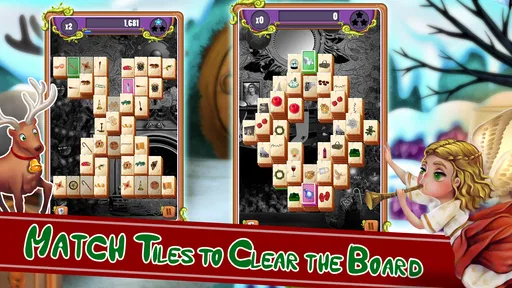

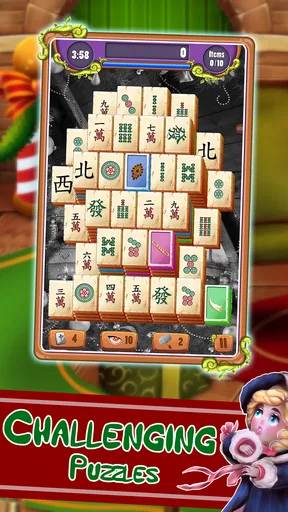
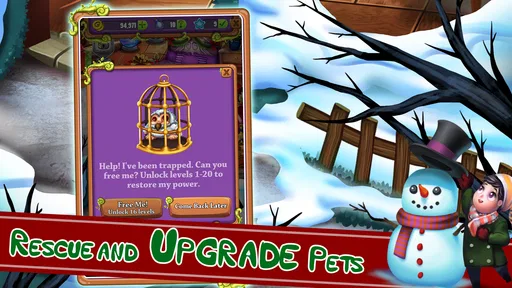
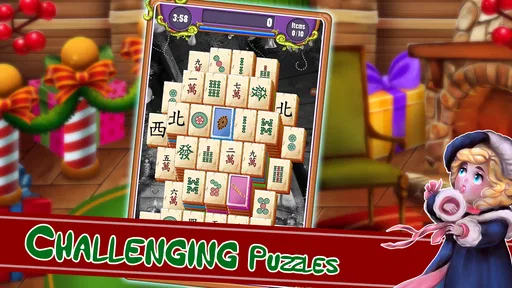
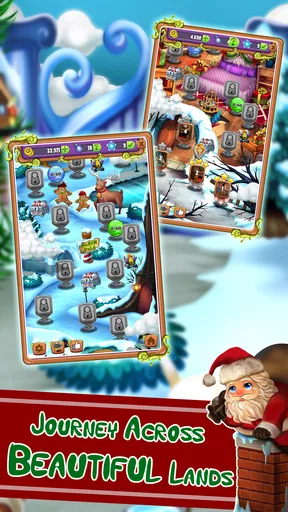
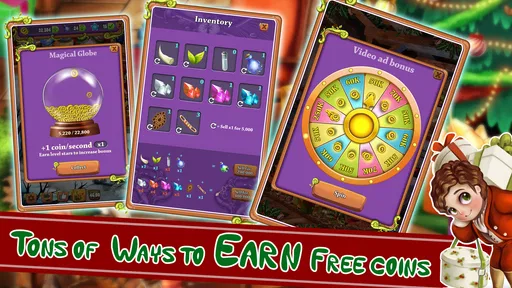
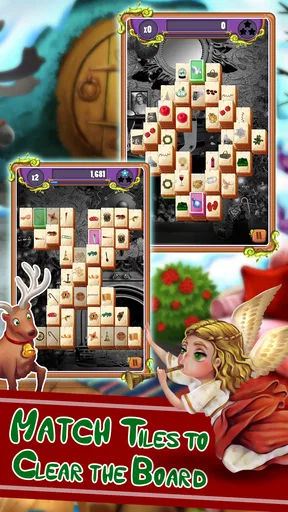
Our Review of Christmas Mahjong: Holiday Fun
 Analysis by Appyee
I found Christmas Mahjong: Holiday Fun to be a gentle, familiar board game with a clear seasonal identity. It takes the traditional mahjong solitaire idea—removing matching tile pairs from a layered arrangement—and wraps it in Christmas artwork. That makes it easy to understand almost immediately, especially if you already enjoy quiet matching puzzles rather than fast arcade games.
My first impression was that this is best treated as a relaxed, short-session game. It does not ask me to learn a complicated rule set or manage a large collection of characters and resources. I can open it, look for available pairs, and settle into the board at my own pace. The Christmas presentation gives the familiar format a little more personality, although the seasonal theme will naturally appeal more strongly during the holidays than throughout the rest of the year.
A calm mahjong experience with accessibility in mind
I look at accessibility in Christmas Mahjong as a question of whether its layered tiles feel comfortable to read and select, not just whether the rules are easy to learn. In my experience, a steady scan pattern and a stable device position can make each board less tiring, especially during a short break. That practical approach also helps clarify which parts of the game feel welcoming and where its visual demands may still be a barrier.
Readability and navigation on a tile-based board
The biggest accessibility question in any mahjong solitaire game is not whether the rules are understandable; it is whether the tiles remain easy to distinguish when many of them are packed together. In this game, the visual task is central. I need to identify matching symbols, notice which tiles are exposed, and separate playable pieces from those covered by others. Anyone with reduced vision, difficulty distinguishing similar patterns, or trouble tracking busy images may find that the board demands more concentration than the simple rules suggest.
That said, the basic interaction is refreshingly direct. The game belongs to the board puzzle category, so its central action is selecting tiles rather than navigating a complicated menu system. This matters for players who prefer a predictable interface and do not want to learn several gestures before they can begin. I would still recommend testing a board in the intended playing position—upright, flat, or with a larger phone display—because the practical readability of small symbols can change considerably from one device to another.
A useful habit is to scan the board in layers instead of tapping randomly. I look first for pairs that are visibly free on at least one side, then check whether removing them will uncover a more valuable tile underneath. This approach reduces visual clutter and also helps players who become overwhelmed when too many possible matches compete for attention. It turns the game into a manageable sequence of small decisions rather than one large visual search.
The Christmas decoration is part of the appeal, but decorative detail can compete with the symbols that actually matter. Players who rely on strong visual separation should pay attention to whether the tile faces remain comfortable to read on their own screen. I would avoid playing with the display dimmed too far or with glare across the glass. Those are ordinary environmental adjustments, but they make a noticeable difference in a game where recognizing small differences is the entire challenge.
Motor demands and sensory comfort
From a motor perspective, this is a relatively low-pressure format. There is no need for rapid swiping, repeated button mashing, or precise movement across a continuously changing scene. I can pause between choices and use deliberate taps. That makes it a more approachable option for someone who finds fast games tiring or who prefers a slower rhythm because of hand discomfort or limited dexterity.
However, “slow” does not mean completely effortless. The board may place several selectable tiles close together, so a player with tremors or reduced tapping precision could occasionally touch the wrong piece. A stylus may help some people, while others may find a larger phone or tablet more comfortable than a compact handset. I would not assume that every player will have the same experience simply because the game lacks reflex-based action.
The sensory side is similarly mixed. The holiday styling can make the game feel warmer and more inviting than a plain set of tiles, but players who are sensitive to visual decoration may prefer a simpler presentation. I also think this title works best for people who enjoy quiet concentration. It is not the kind of game I would choose when I want a strong soundscape, dramatic feedback, or constant stimulation. Its attraction comes from the board itself and from the satisfaction of gradually clearing it.
One practical tip is to play in short rounds rather than forcing a long session. Mahjong solitaire can become visually tiring because the player repeatedly compares shapes and symbols. Taking a break after a board, changing the viewing angle, or switching hands can make the experience more comfortable. This is especially useful for older players or anyone who notices eye strain during detailed puzzle games.
Where it fits into everyday life
I can see myself using this game in several ordinary situations: during a quiet coffee break, while waiting for an appointment, or in the evening when I want something more engaging than scrolling but less demanding than a competitive game. A board puzzle is also easier to put down than a story-driven game. If an interruption arrives, the mental commitment is small, and I can return to the matching task later without remembering a plot or a complicated objective.
It may also suit family members who enjoy traditional puzzles but are not interested in modern action games. The rules are familiar enough to explain quickly: find matching, available tiles and remove them. That simplicity makes it suitable for casual shared play, although the small symbols and layered board can still be a challenge for someone who needs larger visual targets.
The Everyone content rating makes the game broadly suitable for a general audience. I would still choose the device and setting thoughtfully for younger children. The puzzle is calm, but the strategy is not necessarily obvious at first, and a child may need help understanding why a pair cannot be selected or why removing one match can affect later choices. For adults, the same design can be pleasantly meditative; for children, it may work better as a guided matching activity than as a completely independent game.
The game is free to download, which lowers the barrier to trying it. In-app purchases range from $1.99 to $19.99 per item, so I would approach optional spending carefully, particularly if the device is shared with children. The free entry point is useful because the best way to judge this title is personal: some players will enjoy the holiday atmosphere and repeated tile-clearing loop, while others will find the format too quiet or visually repetitive.
What the developer’s format does well
Beautiful Mahjong Games by Difference Games has chosen a format with an immediate learning curve. I do not need a tutorial-heavy introduction to understand the objective, and that makes the game approachable for people who already know mahjong solitaire. The seasonal framing also gives the familiar board a reason to feel different from a plain, generic puzzle. It is a small change, but it helps the game feel appropriate for holiday downtime.
The title has been available since November 20, 2017, and its current version is 1.0.87. It supports devices running Android 7.0 or later. Those details matter for anyone using an older phone or maintaining a family device for occasional games. Before installing, I would check the Android version rather than assuming that any older handset can run it simply because the puzzle itself looks uncomplicated.
Its audience is not tiny: the game has passed 500 thousand installs, with an average rating of 4.6 from around 15 thousand ratings and about 4.7 thousand written reviews. I do not treat popularity as proof that every player will find the visuals comfortable, but it does suggest that the basic combination of mahjong solitaire and Christmas presentation has found a substantial casual audience.
How it compares with other board-puzzle choices
Compared with a standard non-themed mahjong solitaire game, this one has a stronger seasonal mood but may feel less neutral for year-round use. If I want a traditional-looking puzzle that blends into any month, a plain mahjong app would probably be the better fit. If I want something that feels connected to Christmas gatherings or winter evenings, the holiday artwork gives this version a clearer identity.
Compared with match-three games, the experience is slower and more deliberate. Match-three titles often reward quick pattern recognition and may create more visual excitement, while this game asks me to consider tile access and future moves. I prefer this format when I want to think without pressure. Someone who needs constant motion or immediate rewards may find it under-stimulating.
It also differs from competitive board games. There is no need to wait for another player or keep up with an opponent’s turn. That makes it better for solitary relaxation, but less suitable if the main reason I play board games is social interaction. Likewise, people looking for a deep strategy system should understand that the appeal here comes from arranging choices within a familiar matching puzzle, not from a large rulebook or evolving campaign.
Small strategies that make the boards more manageable
The most useful improvement I made was to stop choosing the first obvious pair automatically. A pair may be available now, but removing it can leave a less useful tile exposed or preserve a better route for later. I try to compare the number of blocked pieces each move might release. This is not complicated strategy, yet it makes the game feel more thoughtful and reduces the frustration of reaching a position with few options.
I also recommend prioritizing tiles that sit high in the layout when two choices appear equally safe. Clearing upper pieces can reveal more of the board and make later matches easier to see. This is particularly helpful for players who struggle with visual crowding: instead of scanning every tile repeatedly, I create open space first. The result is both a strategic advantage and a readability aid.
Another helpful workflow is to use a consistent scan pattern. I move from the outer edges toward the center, then inspect the exposed layers before returning to the edges. Random searching makes it easy to overlook a legal match, especially when holiday artwork and similar symbols blend together. A repeatable pattern lowers the memory burden and gives the session a calmer structure.
I would also avoid treating every board as a test of speed. Taking a few seconds to verify that both tiles are genuinely free is more useful than tapping quickly. This matters for players with motor limitations, but it is good advice for anyone: deliberate selection prevents mistakes and keeps the focus on solving rather than rushing.
Remaining barriers before you choose it
The main limitation is that accessibility depends heavily on visual comfort. The game’s core task requires recognizing tile symbols in a layered arrangement, and I would not recommend it as a confident choice for someone who needs guaranteed large-print controls, strong contrast settings, or spoken guidance. Those needs call for an app that explicitly centers them. Here, the safest approach is to try a board and judge whether the tiles remain clear without squinting or repeated zooming.
Players with color-vision differences may also want to pay close attention to whether the symbols themselves, rather than decorative colors, provide enough information. The game is based on matching tiles, so recognizable markings are more important than the Christmas palette. If the artwork makes pairs difficult to distinguish, the theme becomes a disadvantage instead of a benefit.
There is a similar trade-off for people who need highly consistent controls. The straightforward tile-selection format is easier than a game with many gestures, but any accidental tap can interrupt careful planning. I would use both hands or place the device on a stable surface if holding it makes accurate selection difficult. A tablet could offer more room, although the experience will still depend on how the board scales on that particular device.
The free model is another consideration. I appreciate being able to try the game without paying upfront, but the presence of optional purchases means I would review spending controls before handing the device to a child. Players who strongly prefer a one-time purchase with no additional offers may be more comfortable with a paid alternative, even if it lacks the Christmas theme.
Who should play, and who should skip it
I would recommend this game to someone who likes mahjong solitaire, seasonal artwork, and quiet puzzles that can be played in short bursts. It is especially appealing if you want a familiar board format without competition, reflex pressure, or a complicated narrative. It can also be a nice choice for a holiday-themed device shared among adults and older children, provided the tile size and visual clarity work for everyone using it.
I would be more cautious about recommending it to players who need extensive accessibility controls, dislike decorative themes, or want a substantial strategic campaign. It is also not my first choice for someone seeking social play, rapid action, or a game that changes dramatically from session to session. The central loop is intentionally focused, and that focus is either its strength or its limitation depending on what you expect.
For me, the best use case is a quiet pause when I want to occupy my attention without exhausting it. I can approach each board methodically, use the outer-to-inner scan, and stop before visual fatigue sets in. Those small habits make the experience more comfortable and reveal more of the puzzle’s strategy than simply matching the first pair I notice.
Overall, Christmas Mahjong: Holiday Fun is a pleasant seasonal board game with an approachable premise and a low-pressure pace. Its 4.6 average and broad audience reflect a format that is easy to pick up, but I would not confuse simplicity with universal accessibility. The visual demands of layered tiles, the possibility of tapping the wrong piece, and the optional purchases are real considerations.
My inclusive verdict is positive, with a practical caveat: try it if you want a calm Christmas-themed mahjong puzzle and your device displays small tile details comfortably. I would recommend it to friends who enjoy traditional matching games, while suggesting a different option for anyone who needs explicit large-print, audio, or advanced motor-access support. As a free game for relaxed holiday downtime, it earns a place on my shortlist; as a fully adaptable puzzle for every ability and setting, it is more limited.
Verdict
Strengths of Christmas Mahjong: Holiday Fun
- Relaxing tile-matching gameplay suits short holiday breaks.
- Festive Christmas artwork creates a cheerful seasonal atmosphere.
- Simple controls make it accessible for casual players.
- Multiple layouts provide variety beyond a single puzzle.
- Offline play is convenient when traveling or away from Wi-Fi.
Limitations of Christmas Mahjong: Holiday Fun
- Seasonal theme may feel repetitive after extended play.
- Some puzzles can become too easy for experienced Mahjong players.
- Limited social features reduce interaction with friends.
- Ads may interrupt the experience in the free version.
- Replay value may decline once familiar layouts are completed.
Similar Picks in This Category
View All
Ludo King®
Gametion4.1

Ludo
Yarsa Games4.6

Tile Master® - Matching Game
Higgs Studio3.6

Checkers Online
CC Games4.6

Dominoes
Loop Games4.7

Chess
Chess Prince4.6
Frequently Asked Questions
What is Christmas Mahjong: Holiday Fun?
Christmas Mahjong: Holiday Fun is a festive tile-matching puzzle game built around the classic Mahjong solitaire format. You clear matching pairs from holiday-themed layouts while enjoying Christmas visuals, seasonal symbols, and a relaxed atmosphere. It is designed for casual play, making it suitable for short sessions during breaks or longer gameplay when you want a simple winter-themed puzzle experience.
How do you play Christmas Mahjong: Holiday Fun?
The main objective is to remove all tiles from the board by selecting two identical tiles that are available for matching. A tile is generally playable when it is not covered and has an open side. You need to plan your moves carefully because removing tiles in the wrong order can leave matching pairs blocked. The game rewards observation, patience, and strategic thinking rather than fast reactions.
Is Christmas Mahjong: Holiday Fun suitable for beginners?
Yes, the game is generally approachable for beginners because its basic rules are easy to understand and the pace is much more relaxed than action-oriented games. New players can learn by identifying exposed matching tiles and gradually understanding which moves open the board. However, some layouts may still require careful planning, so the experience can remain interesting for experienced Mahjong solitaire players as well.
Can Christmas Mahjong: Holiday Fun be played offline?
Whether the game works fully offline can depend on the version installed and the features being used. Core puzzle gameplay may be available without a constant internet connection, but advertisements, updates, analytics, cloud features, or other online services may require access to the internet. It is worth checking the app-store description and testing the game after installation if offline play is important to you.
Is Christmas Mahjong: Holiday Fun free to download and does it contain ads?
Christmas Mahjong: Holiday Fun may be offered as a free download, but free mobile games commonly include advertising or optional in-app purchases. Ads can appear between levels or during other parts of the experience, while purchases may provide benefits such as removing advertisements, unlocking content, or obtaining hints. Before downloading, review the current Google Play or App Store listing for pricing and purchase details.
Play our best games!


